
Press Brake Forming- Everything Designers Should Know
At Astro Metal Craft, precision bending is at the heart of high-quality metal fabrication. To give you an inside look, we stepped into the shop with Maha, one of our skilled press brake operators, to walk through how a press brake machine is set up and run. Whether you’re an engineer, designer, or simply interested in fabrication, this guide outlines the press brake forming process, from start to finish.
What Is a Press Brake?
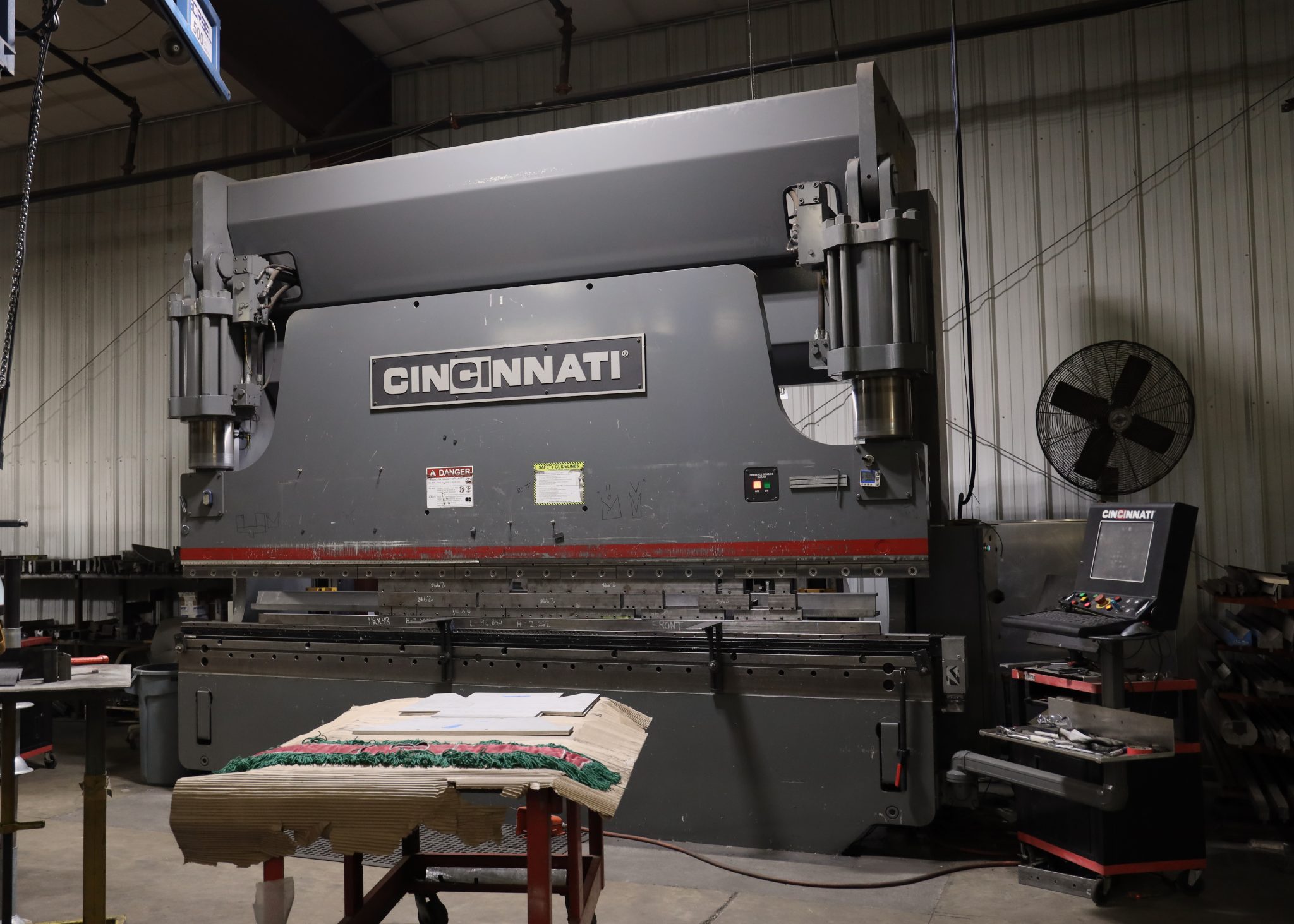
A press brake is a machine used to bend sheet metal into specific angles and shapes. By pressing material between a top punch and a bottom die, operators can create consistent, repeatable forms across a wide range of materials and thicknesses. At Astro Metal Craft we have 3 press brake machines ranging from 10-12″ in diameter with strength ranging from 90-350 tonnage.


1. Reviewing the Shop Drawing
Every job starts with a drawing. According to Maha, the first things he checks are:
- Material type
- Material thickness
- Required bend radius and format
These factors determine the tooling setup and bending method. Thickness is especially critical because it directly affects die selection and forming force.
Shop rule of thumb: The bottom die opening is typically about 6× the material thickness. This guideline helps achieve accurate bends without damaging the material.

2. Verifying Material Thickness
Even when the blueprint specifies thickness, Astro operators don’t rely on paperwork alone.
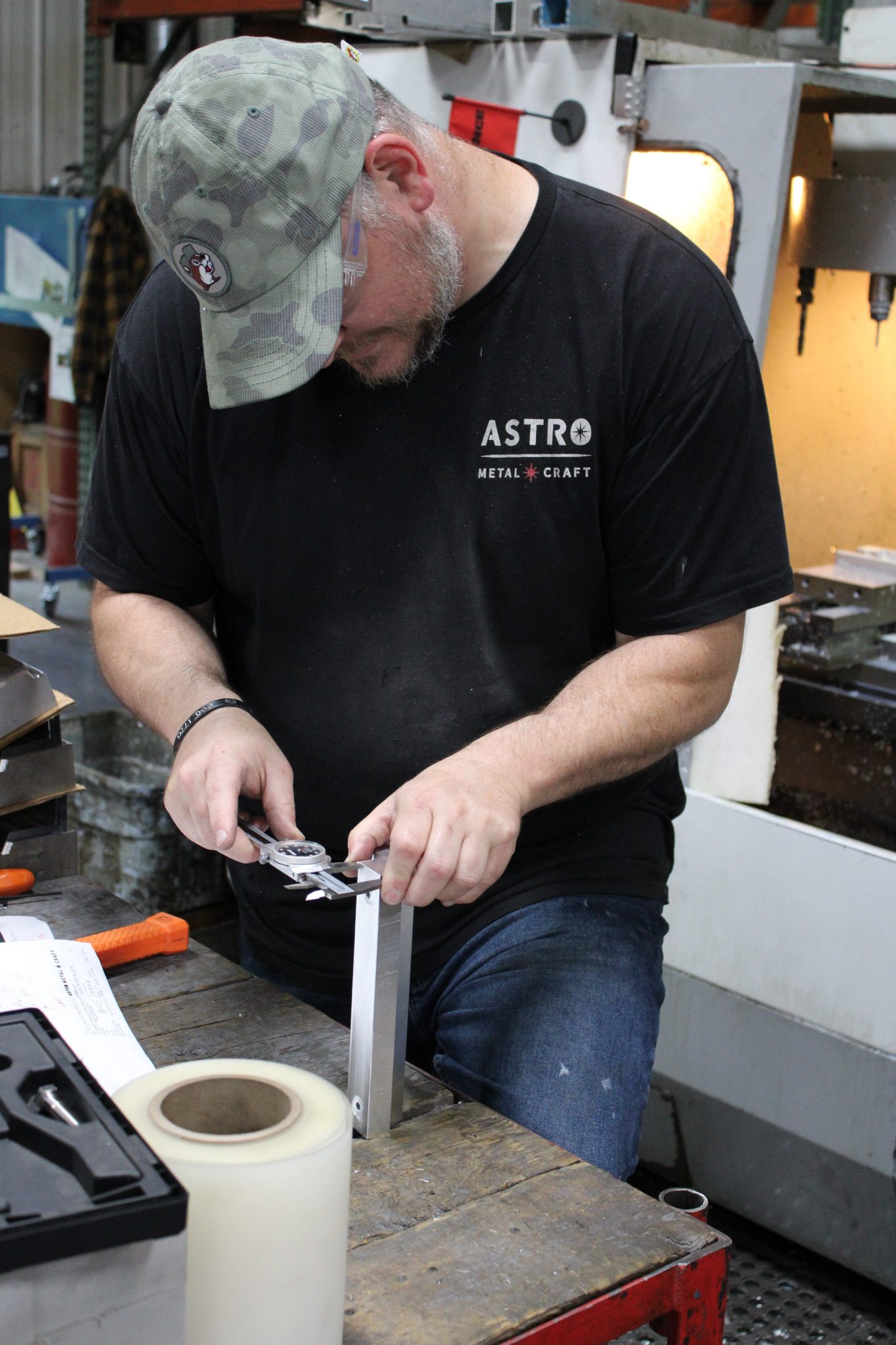
Maha explains that materials are not always exact, so he physically measures the sheet before programming the machine. This ensures:
- Accurate bend angles
- Proper tool selection
- Reduced scrap and rework
The measured thickness is then entered into the press brake controls.


3. Selecting the Right Press Brake Tooling
Tooling setup is one of the most important parts of the process. Maha confirms:
- The top punch is correct
- The bottom die matches the job
- The tooling is properly installed in the machine
Different thicknesses and bend requirements demand different tooling combinations. Getting this right upfront prevents quality issues later.


4. Understanding Forming Methods

At Astro Metal Craft, operators commonly use three primary forming techniques:
Air Forming
- The material is pressed partway into the die, leaving space between the material and the bottom of the die
- The angle is controlled by how deep the material goes into the die
- Offers flexibility—one set of tooling can produce multiple angles
Bottom Forming
- The material is pressed firmly into the bottom die
- Produces consistent angles

- Common for standard bends like 90°
Coining
- Applies much higher force
- Nearly crushes the material into the die
- Used when extremely tight accuracy is required
For sharper-than-90° bends, the team often uses:
- Knife dies
- Acute bottom tooling
- Air forming techniques
Each method is chosen based on geometry, tolerance, and material behavior.


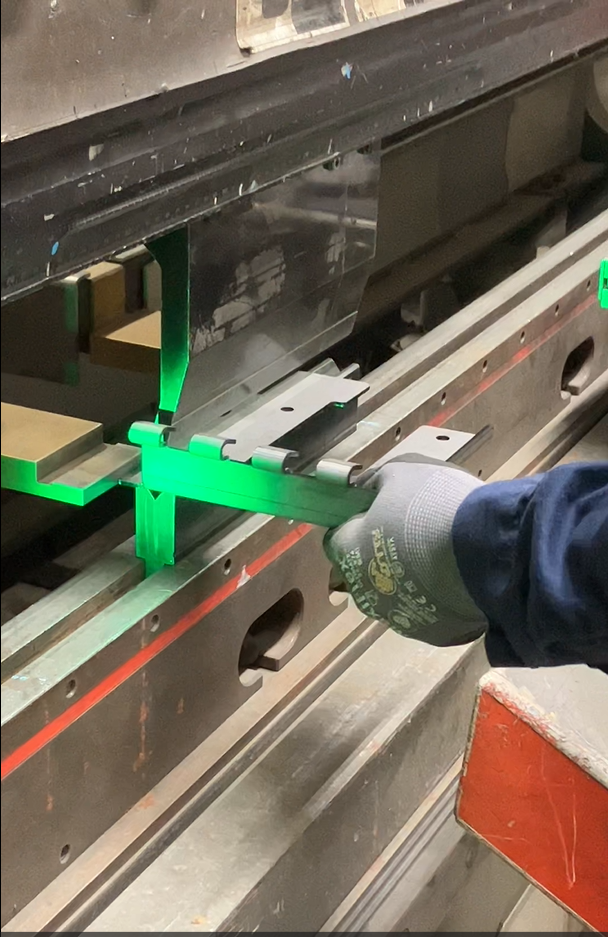
5. Setting the Backgauge and Fingers
Before running the part, Maha adjusts the backgauge and finger systems. These position the sheet precisely so each bend lands in the correct location.
The backgauge is a stopper behind the press brake tooling that positions the sheet metal to ensure accurate and consistent bend locations. The fingers are adjustable stops that attach to the metal edge to keep it properly aligned during bending.
Once everything is verified, the machine is ready to run.
6. Running the Press Brake
With setup complete, the operator initiates the cycle. The press brake forms the metal according to the programmed angle and tooling configuration.
The result: a clean, controlled bend that matches the design intent.


— Design Tips for Engineers and Architects when Forming —
Because Astro works closely with engineers, designers, and architects, Maha shared key advice for anyone designing formed parts:
- Know the Available Tooling
Designs should consider what tooling exists in the shop. This can:
- Reduce lead time
- Lower tooling costs
- Improve manufacturability
- Custom Tooling Is Possible
If a required tool doesn’t exist:
- Astro may order new tooling, or
- The team may custom-make tools in-house when necessary
Experience Matters on the Shop Floor
Maha has been with Astro for about a year and notes that every project brings something new. “All the work here is unique and it’s something that keeps you on your toes every day.”
That mindset reflects Astro Metal Craft’s broader approach:
Delivering truly custom projects using high-quality materials, supported by expert machinists and industry-experienced project managers. We partner with you from initial concept through final completion.
At Astro Metal Craft, attention to these details ensures customers receive high-quality, repeatable formed components every time.
Want help designing a formed metal part? The Astro team is always ready to collaborate early in the design process to ensure the best manufacturable outcome.