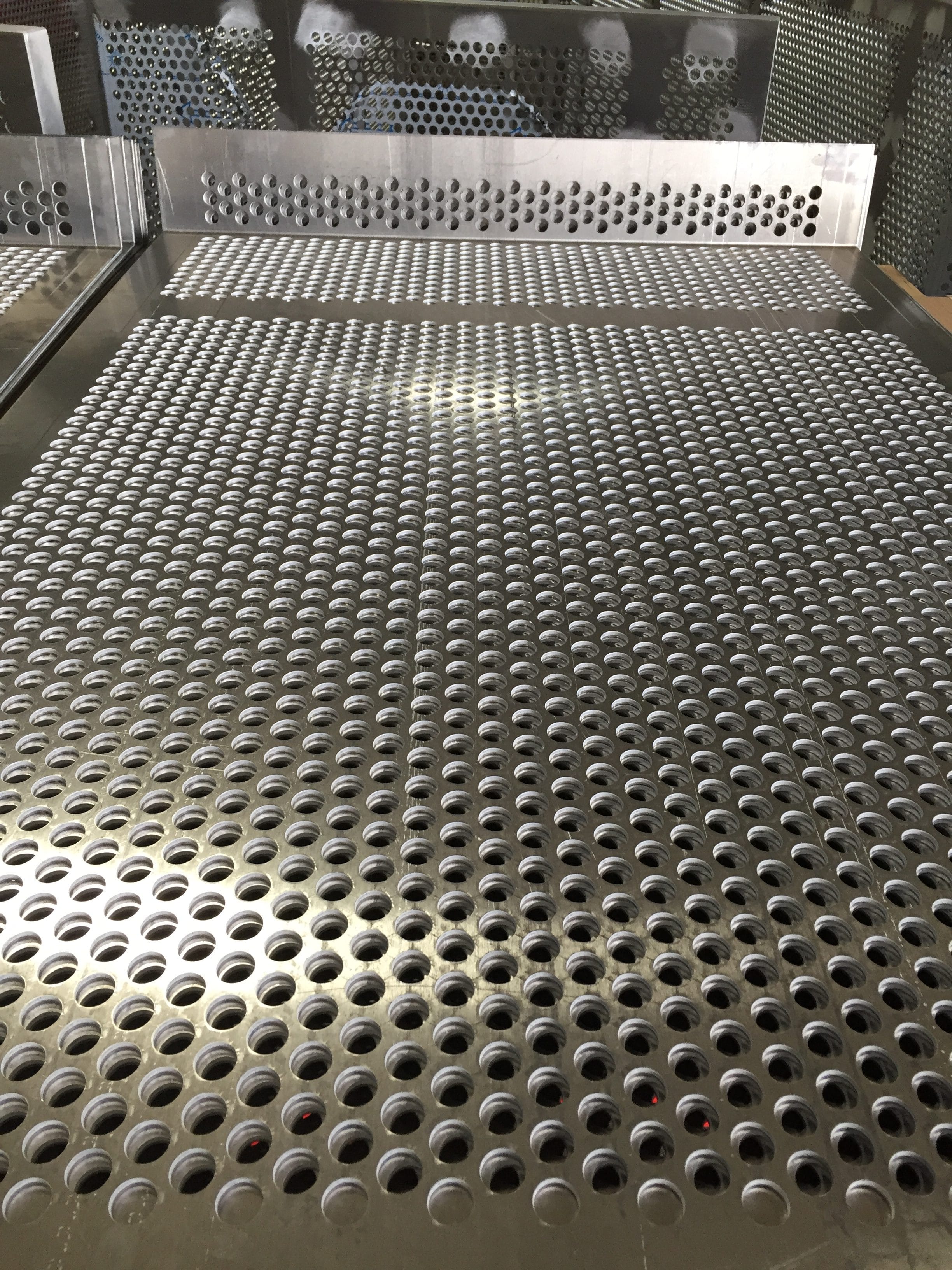

Industrial Screw Conveyor: Design and Use
What Is an Industrial Screw Conveyor?
An industrial screw conveyor is a mechanical conveying system that uses a rotating helical screw, or flighting, to move bulk material through a trough or tube.
Also called auger conveyors, screw conveyors are commonly used to transfer, meter, mix, heat, cool, or otherwise process bulk materials. They can move materials horizontally, at an incline, and in certain applications vertically.
The appropriate screw conveyor configuration depends on the characteristics of the material, required throughput, conveyor orientation, operating temperature, sanitation requirements, and other process conditions.
Types of Screw Conveyors
There is no single screw conveyor configuration that works for every material or process. Astro Metal Craft fabricates several configurations based on the application.
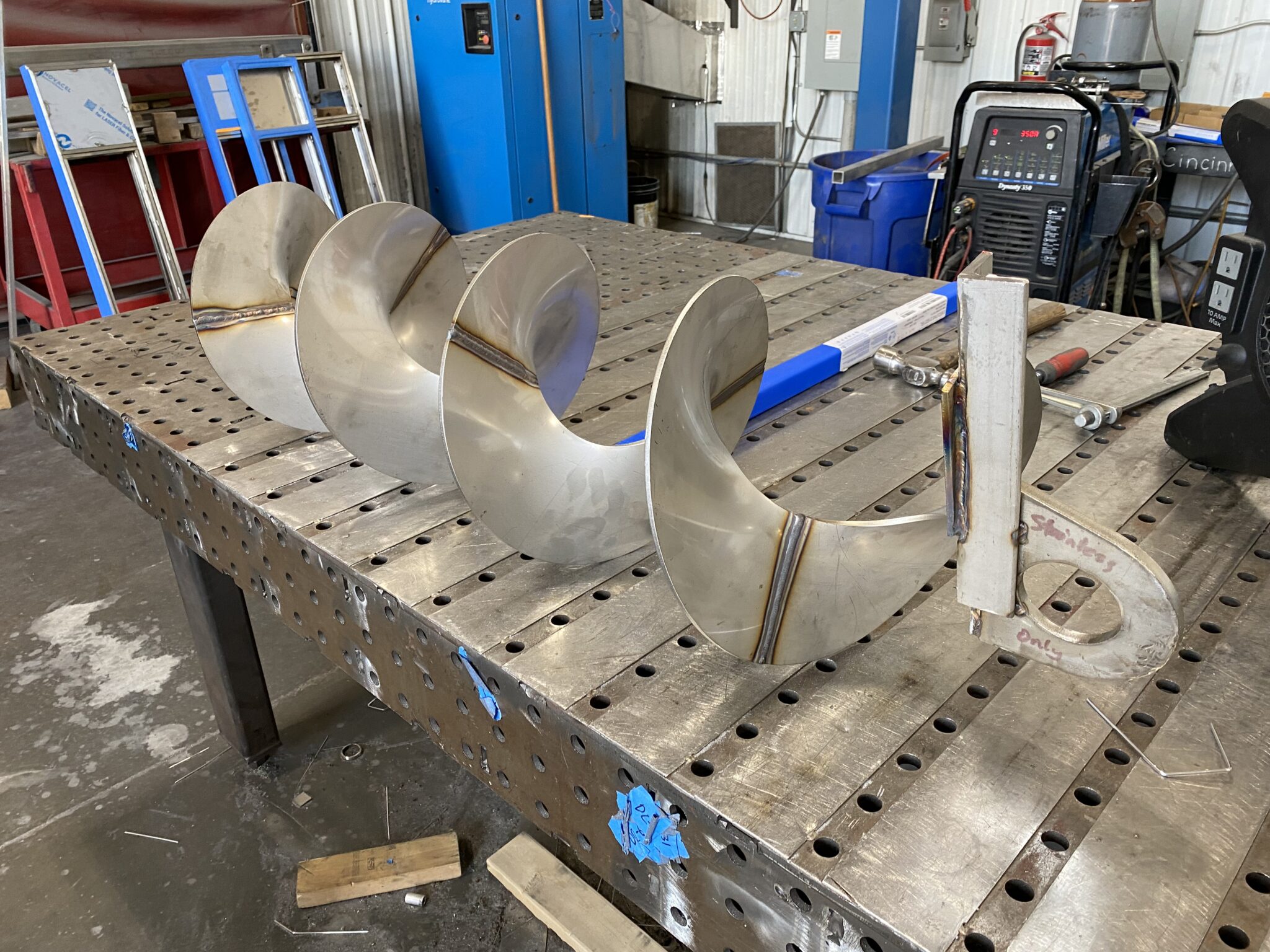
- Standard Screw Conveyors: Standard screw conveyors are commonly used for horizontal or low-incline material handling. Flight diameter, pitch, trough dimensions, rotational speed, and drive requirements are selected based on the material and required capacity. A standard single-flight configuration is common for many applications, but pitch and flight geometry can be modified when the material or process requires it.
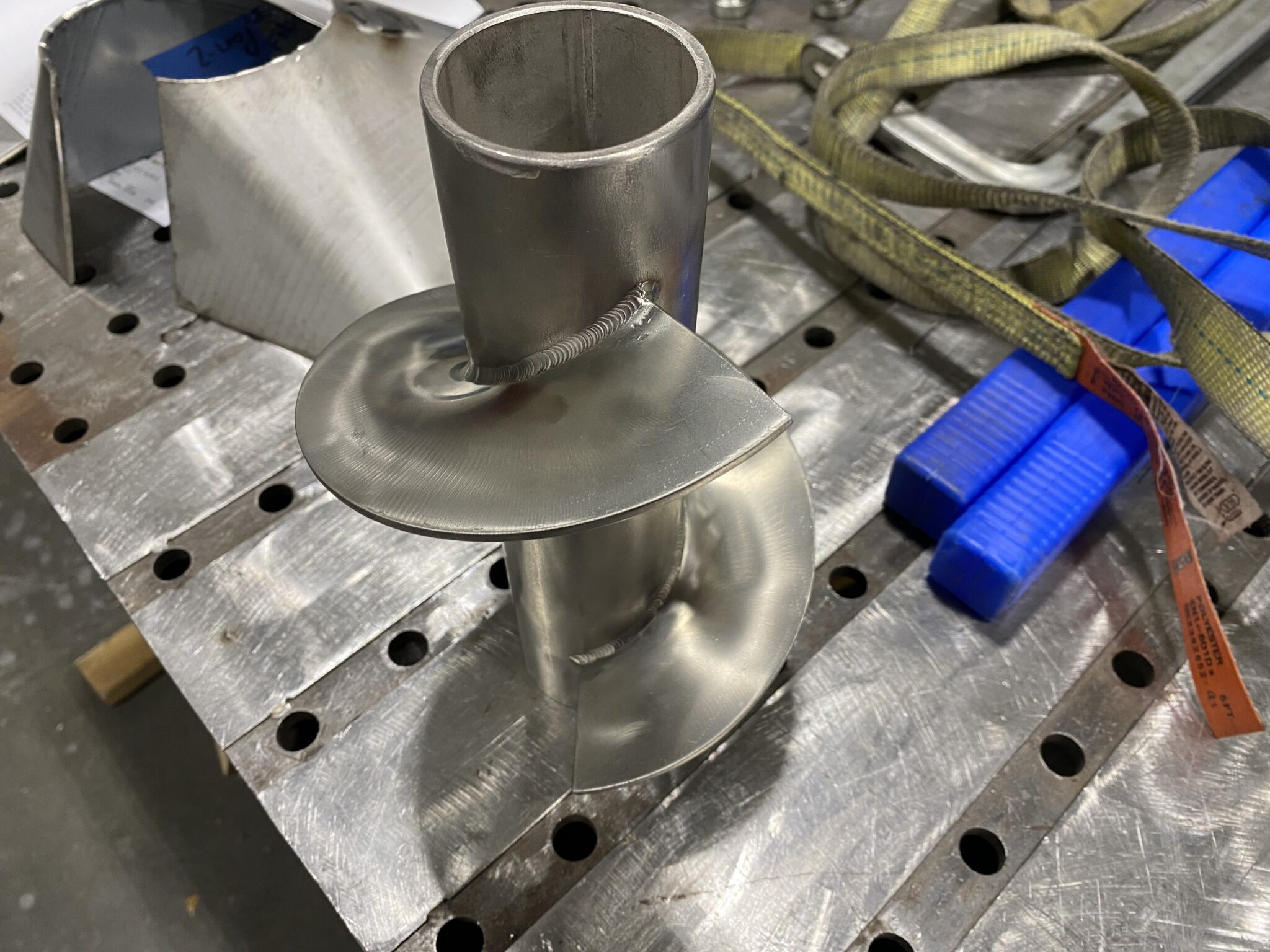
- Shaftless and Ribbon Screw Conveyors: Shaftless and ribbon-style conveyors can be useful when handling materials that are sticky, wet, stringy, or prone to wrapping around a center shaft. Ribbon flighting provides an open configuration that can help reduce material buildup and is particularly useful for certain sludge, wet, or viscous materials.
- Thermal Screw Conveyors: A thermal screw conveyor combines conveying with controlled heating or cooling of the material. Thermal conveyors can be used when temperature control is part of the process rather than simply transporting material from one point to another. Applications can include food processing, biofuel production, and other processes where the conveyed material must be heated or chilled.
- Inclined Screw Conveyors: Inclined screw conveyors move material upward between process stages, bins, hoppers, or other equipment. As the angle of inclination increases, conveying capacity and material behavior change. The screw geometry, rotational speed, fill level, and drive system therefore need to be considered together when designing an inclined conveyor.
- Mobile Screw Conveyors: Mobile screw conveyors can be mounted on a frame with heavy-duty casters when a process requires equipment to be repositioned. Mobility can be particularly useful in facilities with frequent product changeovers, cleaning requirements, or multiple processing locations.
- Sanitary and Food-Processing Screw Conveyors: Sanitary screw conveyors are designed around cleaning, product-contact surfaces, accessibility, and contamination control. Features can include tool-free or simplified disassembly, removable augers, clean-out provisions, appropriate seals and bearings, and configurations that allow the conveyor to be thoroughly washed down.
How Does an Industrial Screw Conveyor Work?
A screw conveyor is more than an auger and motor. The flighting, trough, shaft, drive, bearings, seals, and material inlet and discharge all affect how the system operates.
| Component | Purpose | Design Considerations |
| Flighting | Moves material through the conveyor | Diameter, pitch, thickness, material, flight configuration, wear |
| Trough or tube | Contains and directs the material | Material, dimensions, wear, sanitation, access and clean-out |
| Shaft | Supports the flighting and transfers torque | Diameter, torque, alignment, material, deflection |
| Drive | Rotates the screw | Speed, horsepower, torque, starting load, duty cycle |
| Bearings | Supports the rotating shaft | Load, environment, seals, temperature, sanitation |
| Seals | Help prevent material from reaching bearings and drives | Material compatibility, temperature, sanitation, operating environment |
| Inlet and outlet | Controls where material enters and exits | Capacity, location, process layout, discharge requirements |
 Flighting: Flighting is the helical component attached to the shaft or configured as a shaftless screw. Its diameter and pitch directly affect how material moves through the conveyor. Standard pitch may be appropriate for many horizontal applications, while shorter pitch or specialized flight configurations may be beneficial for materials that require more controlled movement. The flighting material and thickness also need to account for wear, corrosion, temperature, and the characteristics of the conveyed material.
Troughs and Tubes: The trough or tube contains the material and provides the path through the conveyor. Construction materials may include mild steel or stainless steel depending on the application. Sanitary applications may require different construction and access considerations than abrasive or industrial material-handling applications.
Shafts: The shaft supports the flighting and transfers torque from the drive. Shaft sizing must account for the torque required to move the material, conveyor length, loading conditions, and the potential for shaft deflection or misalignment.
Drives and Motors: The motor and drive system must be sized for the conveyor’s operating requirements rather than simply its physical dimensions. Material density, volume, conveyor size, rotational speed, inclination, starting load, and operating conditions all affect the required horsepower and torque. A gear reducer can reduce motor speed while increasing available torque at the screw. Variable frequency drives can provide control over conveyor speed and can allow the system to be adjusted to changing process requirements.
Bearings and Seals: Bearings support the rotating shaft and help maintain proper alignment during operation. Seals help protect bearings and drive components from the conveyed material. Seal selection should account for the operating environment, temperature, material characteristics, and sanitation requirements.
Industries & Applications
Industrial screw conveyors are used across a wide range of processing and material-handling environments, including:
- Food processing
- Water and wastewater treatment
- Agriculture
- Chemical processing
- Biofuel production
- Wood and pulp processing
- Bulk material handling
- Manufacturing and processing facilities
Applications can include conveying material to or from hoppers and bins, transferring material between process stages, metering, mixing, heating, cooling, and controlled discharge.
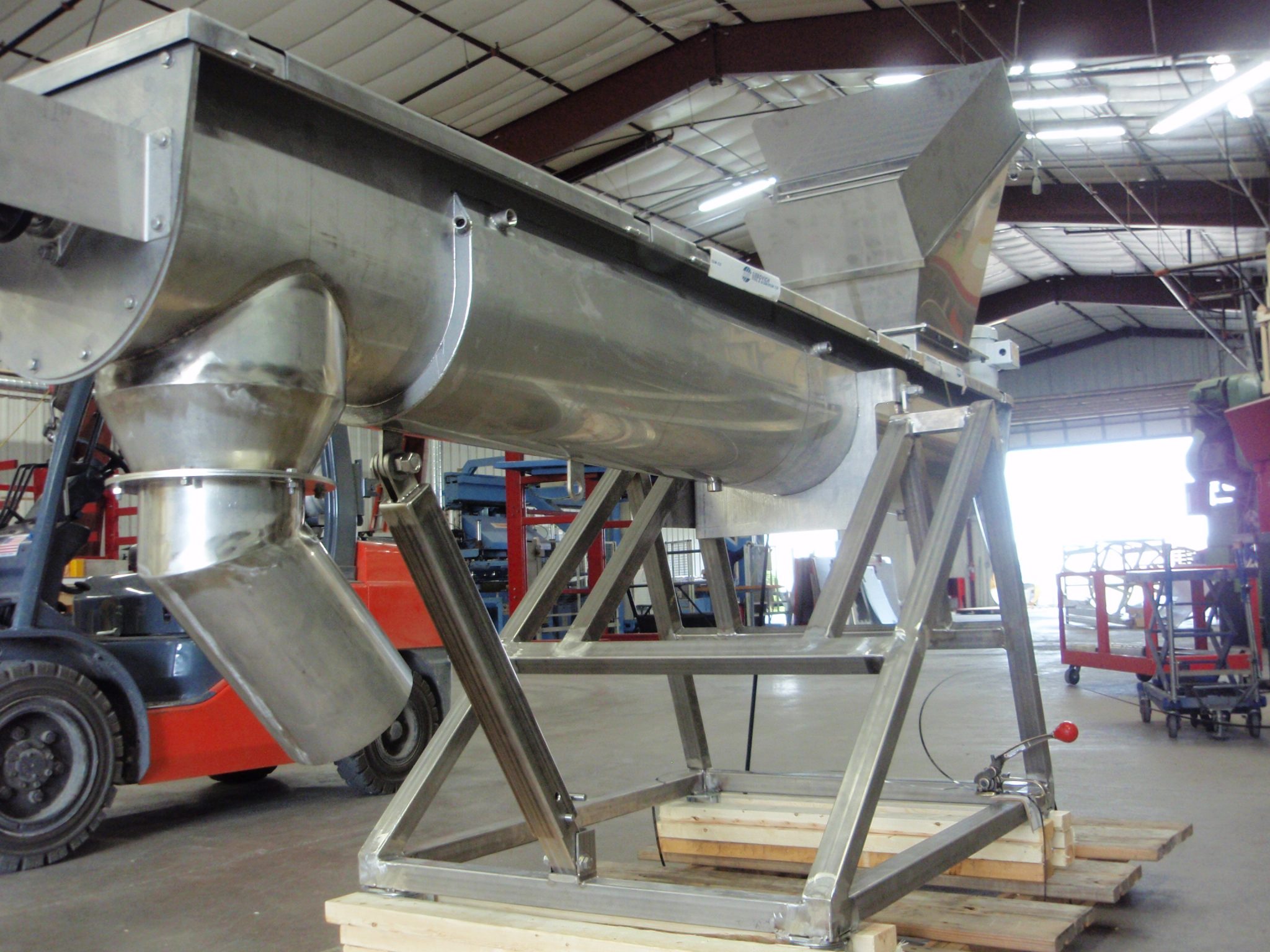
Custom Industrial Screw Conveyor Engineering
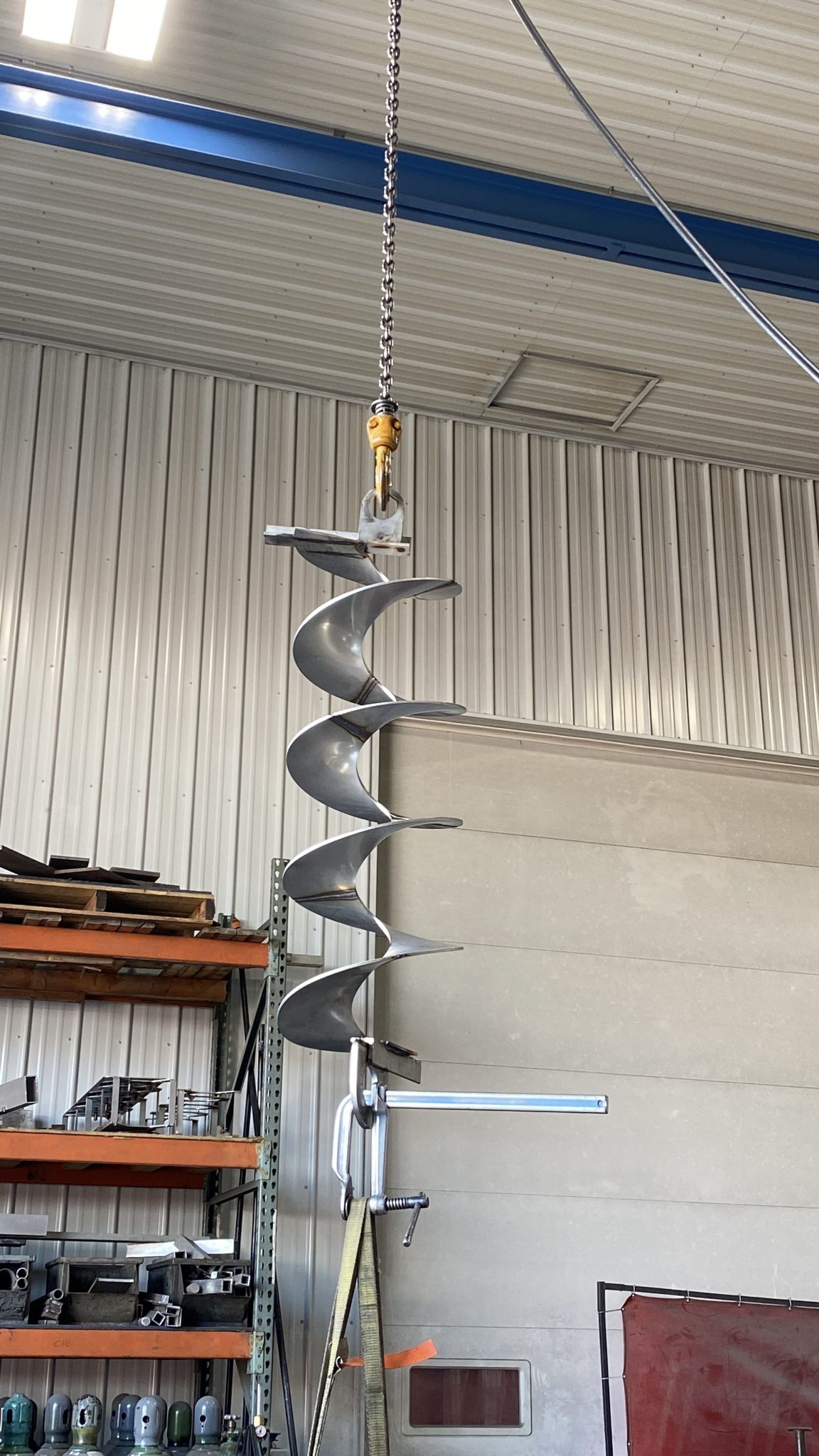
A screw conveyor should be designed around the material and process. Inlet and discharge locations, available space, access for maintenance, cleaning procedures, connection points, and the operating sequence can all influence the final design. Astro Metal Craft works from the application requirements to develop a fabricated conveyor system suited to the process.
Before fabrication, the engineering considerations can include:
- Material characteristics
- Bulk density
- Required throughput
- Material temperature
- Abrasiveness
- Moisture content
- Sanitation requirements
- Conveyor inclination
- Operating speed
- Duty cycle
- Cleaning requirements
- Available space
- Inlet configuration
- Discharge requirements
- Required horsepower and torque
- Expected wear and service conditions
These factors influence the screw diameter, pitch, flight configuration, shaft, trough or tube construction, drive system, bearings, seals, and overall conveyor configuration.
Contact Astro Metal Craft to disucss your custom screw conveyor needs.