

What Stainless Steel Finish is Best for Bacteria Prevention?
In industrial and food processing environments, stainless steel finishes must do more than present a clean appearance — it must deliver measurable hygienic performance. The surface finish of processing equipment plays a direct role in regulatory compliance, product quality, and consumer safety.
Research conducted by the U.S. Department of Agriculture and the U.S. Environmental Protection Agency has taken a close look at how different stainless steel finishes influence bacterial growth. Their findings reveal a critical connection between surface texture, finish quality, and the likelihood of bacterial adhesion and biofilm formation. In other words, microscopic surface variations can determine whether bacteria are easily removed — or given a place to anchor and multiply.
Understanding these interactions is essential for selecting the appropriate surface treatments to improve sanitation, reduce contamination risk, and support long-term hygienic design standards in industrial applications.

Sanitary Differences Between Various Stainless Steel Finishes
In a landmark 2000 study, researchers Arnold and Bailey, working with the U.S. Department of Agriculture and the U.S. Environmental Protection Agency, set out to answer a critical question: How does stainless steel surface finish influence bacterial growth?
They measured two key performance indicators:
- The total number of bacterial cells present on the surface
- The tendency of those cells to cluster together and form biofilms
Both parameters are critical in industrial process environments, where microbial adhesion can directly impact hygienic integrity. The study focused on Salmonella produced from poultry processing equipment. The objective was identify surface properties and processing strategies to minimize the risk of bacteria contamination in poultry production systems.
Industrial metal equipment applications are routinely cleaned to meet strict industry and regulatory standards. However, in this study the samples were intentionally not cleaned during testing. This allowed researchers to isolate and evaluate which surface finishes were inherently more resistant to bacterial attachment and biofilm formation independent of sanitation protocols.
The stainless steel sheets were divided into four treatment groups:
- Untreated control
- Sandblasted
- Sanded (No. 4 finish)
- Electropolished
By comparing these finishes side by side, the study provided valuable insight into how surface texture alone can influence hygienic performance.
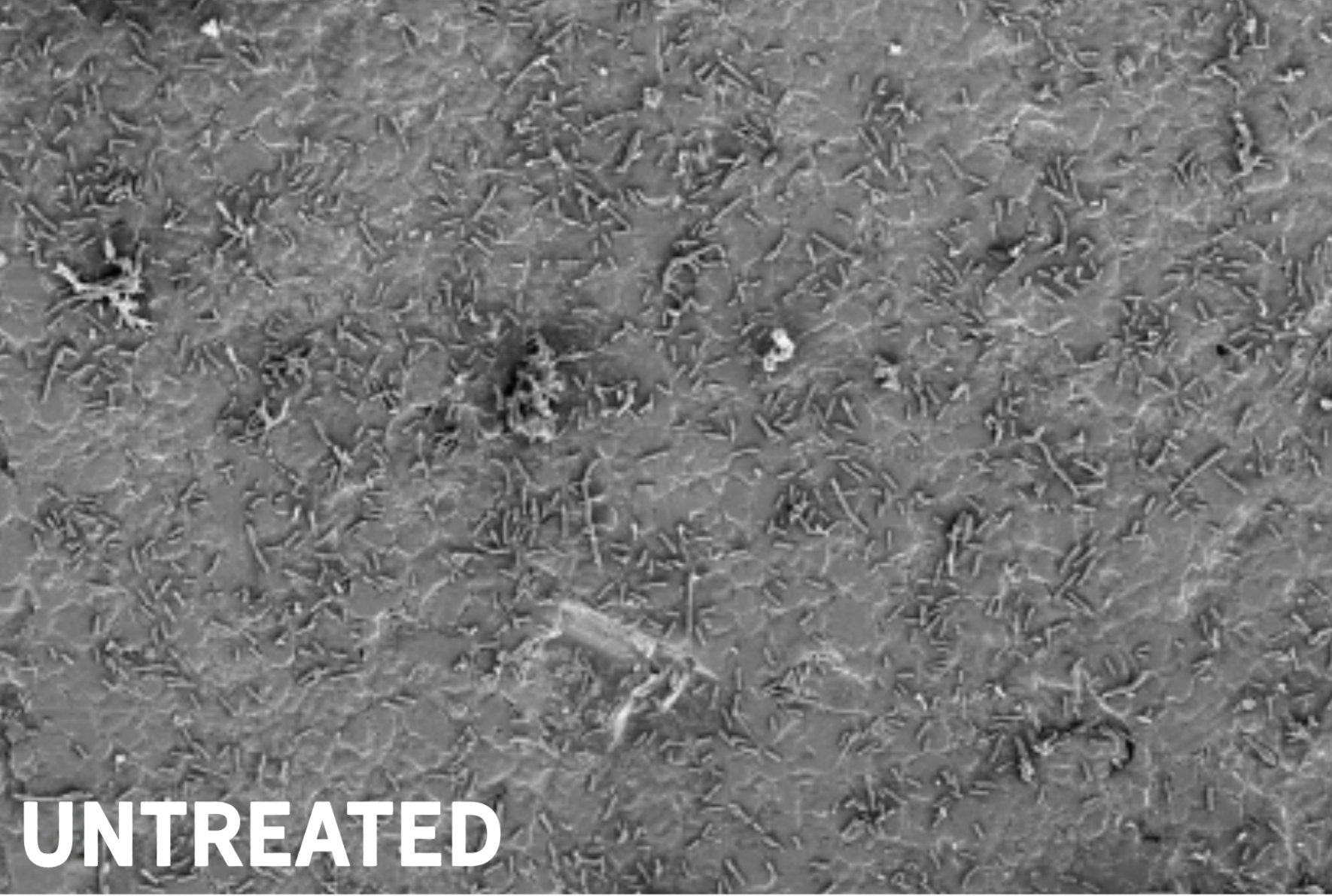

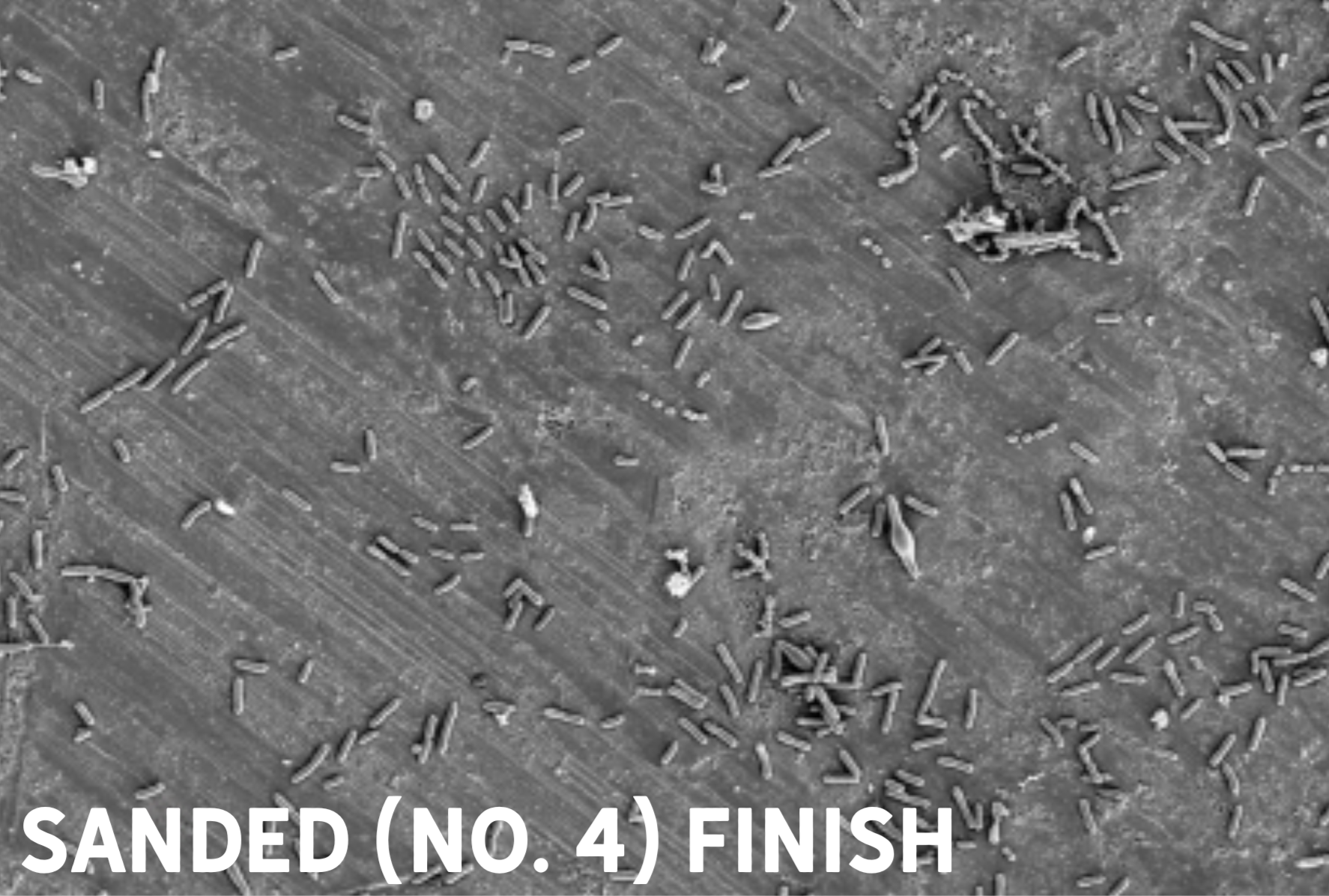

Surface Analysis and Interpretation
Each surface exhibited distinct physical and biological behavior:
- Untreated Surface
Although it appeared visually smooth, the untreated surface contained microscopic cracks and crevices that trapped bacteria and promoted biofilm formation.
- Sandblasted Surface
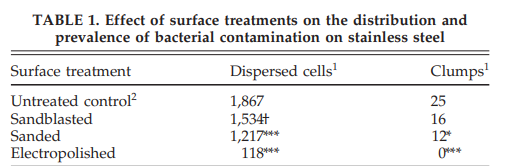
This surface featured numerous small pits. While it retained fewer bacteria than the untreated surface, the surface texture still provided many anchoring points for bacterial attachment. Bacteria retention reduced by an average of 25% between untreated and sandblasted finishes.
- Sanded (No. 4 Finish)
This surface showed directional scratches but was significantly cleaner overall and supported less bacterial attachment than both untreated and sandblasted surfaces. Between sandblasted and sanded (No. 4 Finish) sanded bacteria retention was reduced by an average of 37%.
- Electropolished Surface
The electropolished surface was extremely smooth and reflective, with minimal surface defects. As a result, very few bacteria were able to adhere, and no biofilm clumps were observed. Bacteria retention reduced by an average of 87% between sanded (No. 4 Finish) and electropolished surfaces.
When bacterial counts were compared across all finishes, electropolished stainless steel showed a dramatic reduction in bacterial retention compared to other methods. The average amount of bacterial reduction between untreated to electropolished surfaces was 94%.

Surface Topography and Bacterial Adhesion
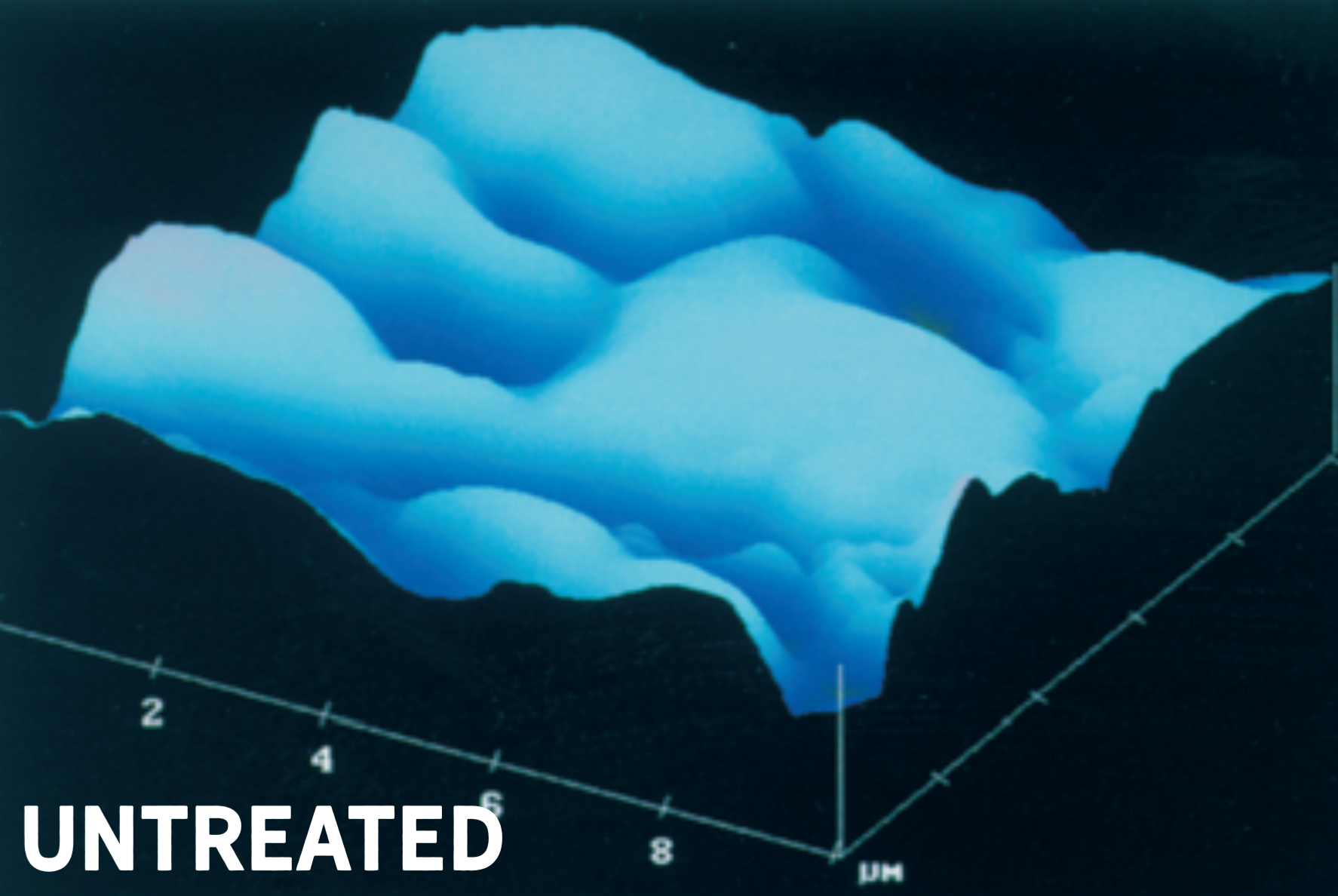
Three-dimensional surface imaging reveals the fundamental reason for these results: surface “peaks and valleys.”
As surface finishes become progressively smoother, these microscopic irregularities are reduced. This limits the ability of bacteria to:
- Mechanically anchor to the surface
- Find shelter from shear forces and cleaning processes
- Initiate biofilm formation
The progressive reduction in surface roughness directly corresponds to a reduction in bacterial attachment and biofilm potential.

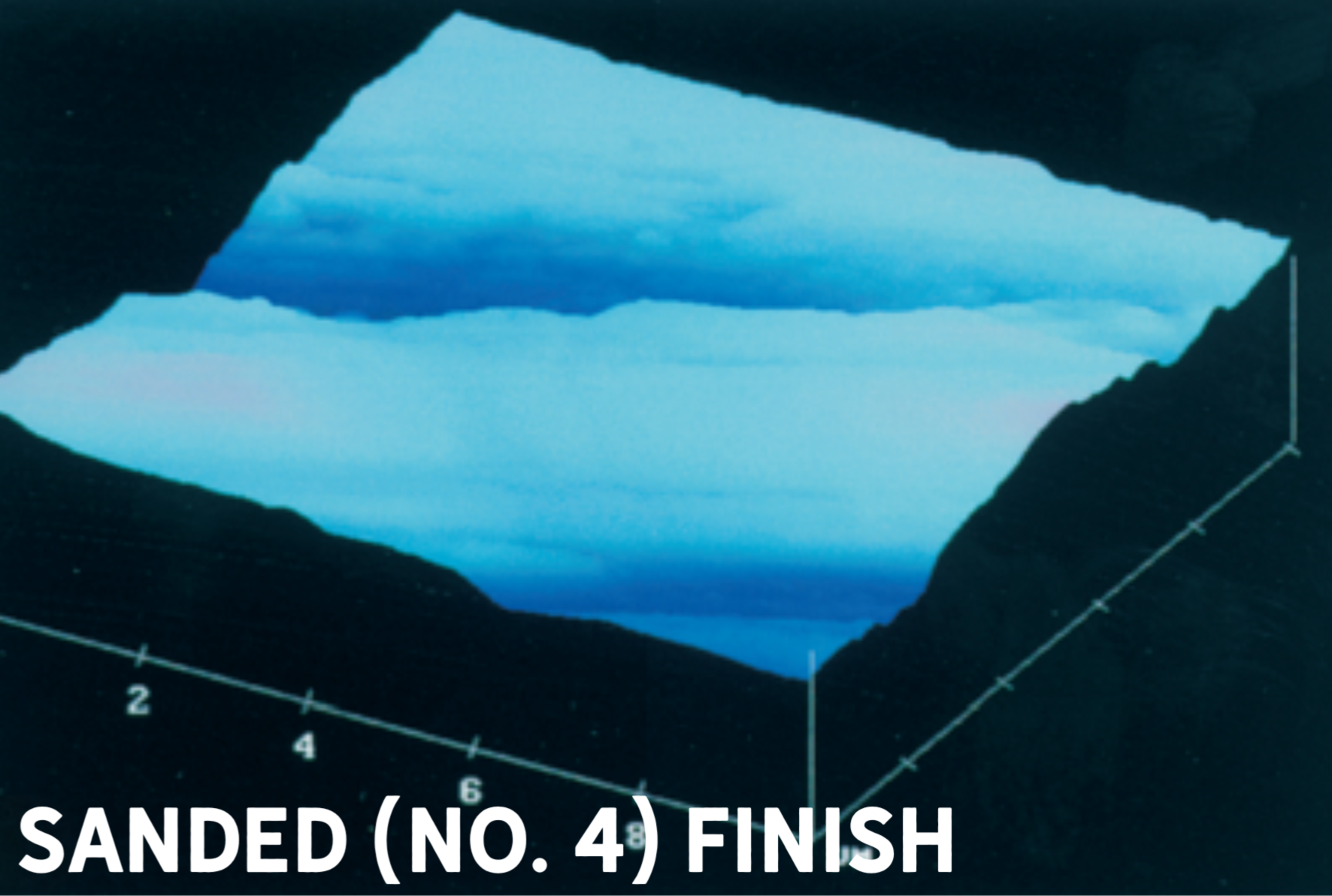
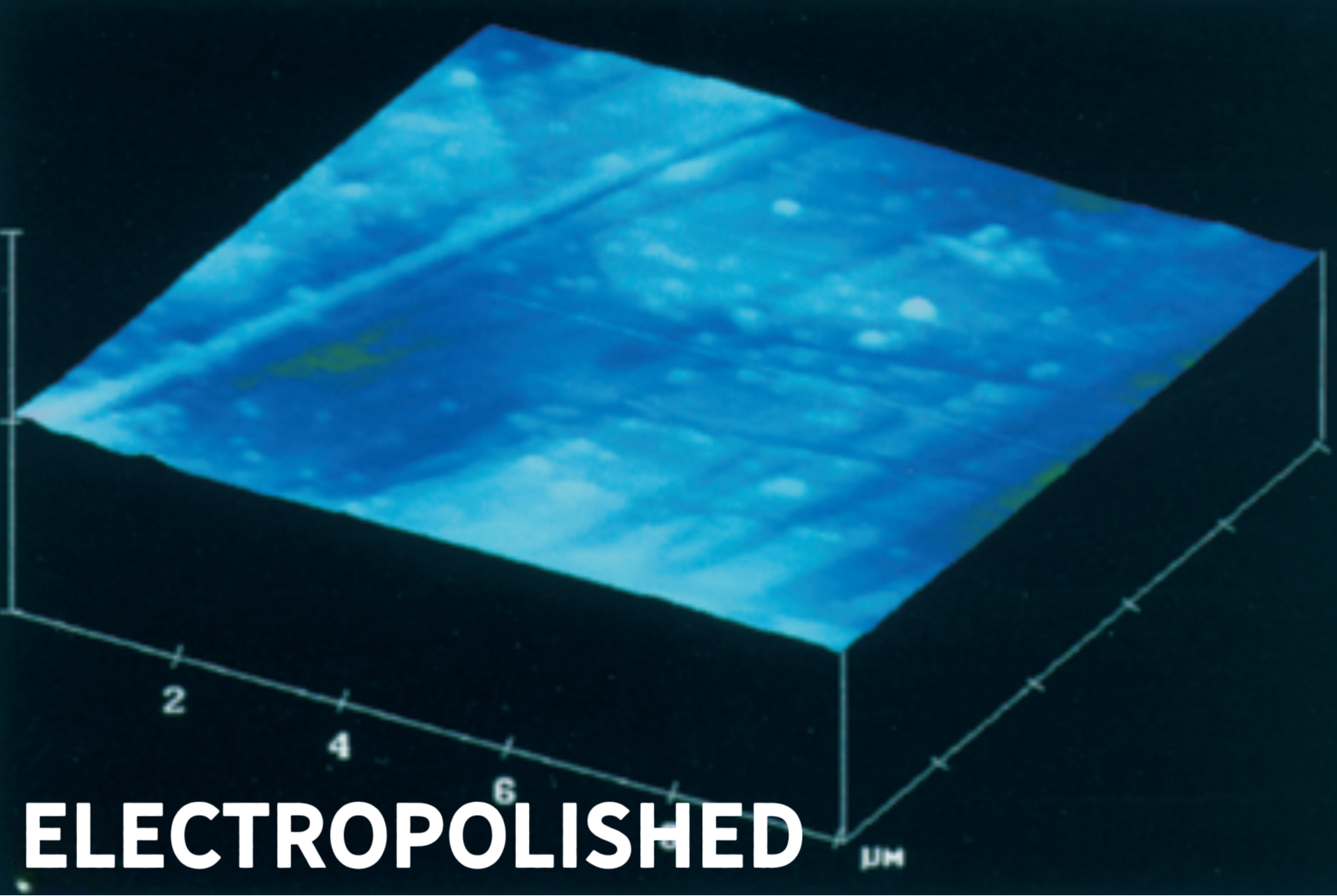
Industry standards generally define a sanitary finish as having a surface roughness average (Ra) of less than 32 𝜇in. However, in higher-risk environments such as food processing, pharmaceutical manufacturing, and water filtration systems, finishes of ≤20 µin Ra or electropolished surfaces (typically 10–15 µin Ra) can be specified to minimize microbial adhesion.
To fully understand this requirement, it’s important to clarify how Ra is calculated. The Ra value represents the average of all surface peaks and valleys measured across the metal. However, a low Ra reading does not necessarily mean the surface is uniformly smooth. The average may reflect many small surface deviations or a smaller number of more pronounced irregularities that mathematically produce the same result.
Surface smoothness is inherently difficult to measure with complete precision. Even with consistent finishing processes, no two pieces of metal will be exactly the same. Creating a perfectly uniform and fully repeatable scale presents ongoing challenges across the industry. Despite these limitations, Ra remains the most widely accepted and reliable measurement for evaluating surface roughness and helping regulate conditions that reduce the risk of microbial buildup in industrial equipment.
Practical Implications for Hygienic Design
Surface finish has a major impact on bacterial retention that is independent of cleaning procedures. The rougher and more irregular a surface, the more opportunities for bacterial attachment and biofilm development.
While this study primarily evaluates base material surface conditions, the introduction of weldments in fabricated industrial equipment represents an additional and often elevated microbial risk vector. Weld seams inherently disrupt surface uniformity and, if not properly executed and finished, can exhibit significantly higher roughness profiles and defect densities than the surrounding base material.
To mitigate this risk, welds must be performed in accordance with qualified welding procedures (WPS) by certified personnel, with verification through appropriate inspection protocols (e.g., visual inspection, surface profile assessment, and, where required, non-destructive examination). Inadequate weld quality or finishing can result in surface discontinuities such as undercut, porosity, lack of fusion, heat tint (oxidation), and micro-crevices. Post-weld finishing operations including mechanical treatments such as grinding and polishing and chemical treatments such as passivation and electropolishing.
Designing with hygienic surface conditions in mind has a direct impact on clean-in-place (CIP) performance. With a smoother surface microorganisms have fewer places to adhere, which makes them easier to remove during cleaning. As a result, systems can often be cleaned using less aggressive chemicals, shorter cycle times, and reduced mechanical action. This lowers chemical and energy consumption and also minimizes wear on equipment to improve overall uptime and operational efficiency.
To find out more about Astro Metal Craft’s finishing options and industrial equipment capabilities visit our website or contact us today.
Searching for more stainless steel finish information? Read our previous article on chemical and mechanical industrial metal finishes.
For further information on this specific study visit Surface Finishes on Stainless Steel Reduce Bacterial attachment and Early Biofilm Formation
Reference: Arnold, J. W., & Bailey, G. W. (2000). Surface finishes on stainless steel reduce bacterial attachment and early biofilm formation: Scanning electron and atomic force microscopy study. Poultry Science, 79(12), 1839–1845. https://doi.org/10.1093/ps/79.12.1839