
Spiral Chutes for Food Processing Applications
Spiral chutes are commonly used when a food product needs to travel vertically or between different elevations without requiring a powered conveyor. A custom spiral chute can be integrated into a larger material handling system to move product from one piece of food processing equipment to another.
Applications may include:
- Lowering dry food products between processing levels
- Moving products from conveyors into bins, hoppers, or containers
- Transferring product between processing equipment
- Reducing the impact associated with vertical product drops
- Managing product flow into storage or packaging equipment
- Connecting conveyors at different elevations
- Providing controlled product discharge into a receiving vessel
The design of a food product chute depends heavily on the characteristics of the material being conveyed. Products with different sizes, shapes, densities, surface characteristics, and fragility can behave differently as they travel through a spiral.
How Spiral Chutes Handle Food Products
Spiral chutes for food processing use gravity to move products downward through a curved, continuous path. Rather than allowing products to make a single large vertical drop, the spiral distributes the elevation change over the length of the chute.
This can help reduce product velocity and impact compared with an uncontrolled drop. The goal is not simply to move the product from Point A to Point B, but to control how the product travels through the system.
Important design considerations include:
- Product characteristics: Size, shape, density, moisture content, and surface characteristics can affect product movement.
- Product fragility: Crackers, pasta, cereal, and similar products may require controlled handling to minimize breakage.
- Product orientation: Some applications require the product to maintain a particular orientation or presentation as it moves through the chute.
- Elevation change: The vertical distance between the inlet and discharge affects the overall spiral geometry.
- Discharge location: The chute can be designed around the location and orientation of downstream equipment.
- Product flow rate: The volume and rate of product moving through the chute can affect chute dimensions and product behavior.
Sanitary Design Considerations for Spiral Chutes
Food processing equipment must be designed with cleaning and sanitation requirements in mind. Sanitary spiral chutes should be evaluated based on the product being handled, the cleaning process, and the surrounding processing environment.
Design considerations may include:
- Accessible product-contact surfaces
- Smooth, cleanable surfaces
- Minimized areas where product can accumulate
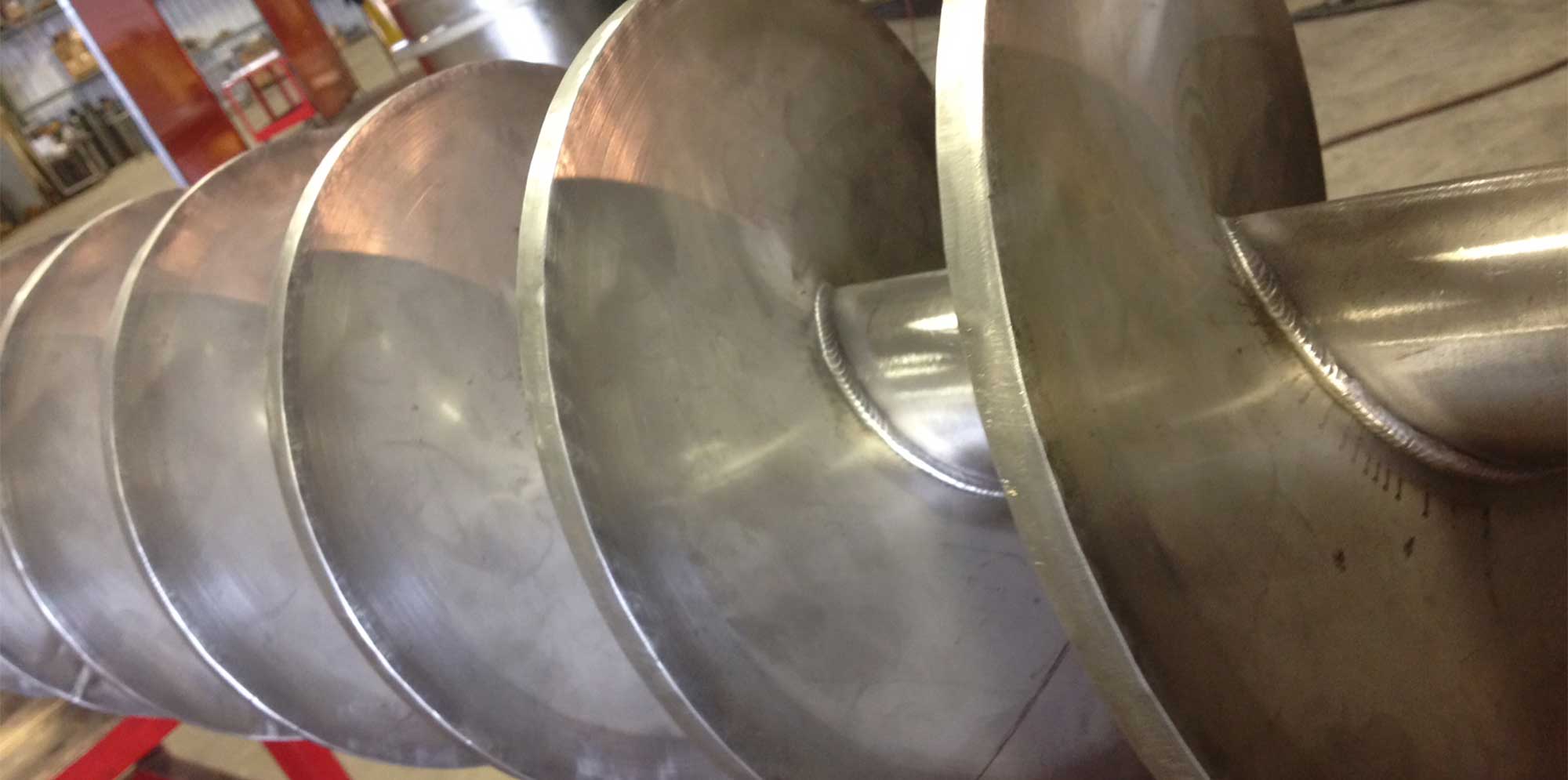
- Appropriate weld finishing
- Elimination or reduction of unnecessary crevices and difficult-to-clean areas
- Compatibility with the intended washdown environment
- Appropriate stainless steel selection for the application
The specific sanitary requirements will vary depending on the food product, facility, cleaning procedures, and applicable standards.
Stainless Steel Spiral Chutes for Food Processing
Stainless steel is commonly used for food processing chutes because it provides corrosion resistance and can be fabricated into smooth, cleanable surfaces appropriate for many food handling environments.
A stainless steel spiral chute can be designed with product-contact surfaces suited to the application and surrounding equipment. Material selection may include consideration of alloy, thickness, surface finish, welding requirements, and cleaning procedures.
The chute’s construction may also need to accommodate mounting brackets, supports, transitions, access requirements, and connections to other food processing equipment.
Astro Metal Craft Spiral Chute for Pasta Handling

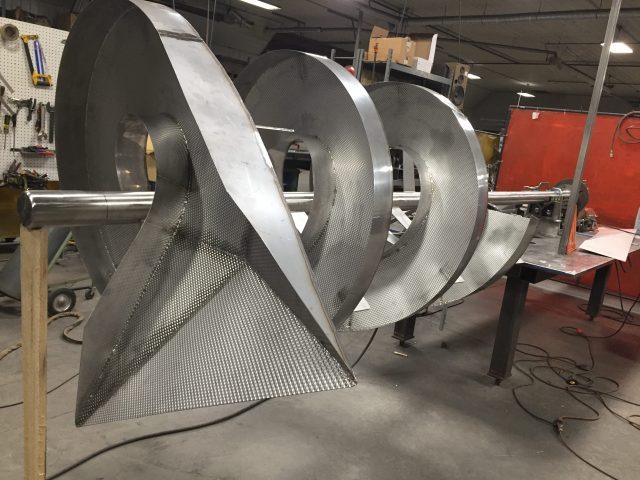
One application we recently fabricated was a stainless steel spiral let-down chute for lowering pasta into a receiving bin.
In this type of application, the spiral chute is positioned inside the bin being filled with product. As pasta enters the bin, the product can eventually begin to back up toward the chute as the bin fills.
The spiral can be designed so that product spilling over from the primary flow path falls within the spiral rather than making an uncontrolled drop. This provides a gentler landing area for the product and helps manage product movement as the receiving bin approaches capacity.
The bin can also incorporate load cells at its feet so the weight of the product inside the bin can be monitored. A slide gate at the bottom of the bin can then control when product moves to the next processing station.
In this type of system, the spiral chute is more than a simple piece of conveying equipment. Its geometry and integration with the bin, load cells, slide gate, and downstream equipment can contribute to the overall material handling process.
Frequently Asked Questions
➤ What are spiral chutes used for in food processing?
Spiral chutes are used to move food products between elevations using gravity. They can provide controlled product handling while reducing the need for powered conveying equipment.
➤ What food products can be handled with a spiral chute?
Spiral chutes can be designed for a variety of products, including pasta, crackers, cereal, snacks, and other dry food products. The appropriate design depends on the product’s size, shape, density, fragility, flow characteristics, and required capacity.
➤ Are spiral chutes for food processing sanitary?
Spiral chutes can be fabricated with sanitary design considerations such as stainless steel construction, cleanable product-contact surfaces, appropriate weld finishes, and configurations suited to the facility’s cleaning and washdown procedures. Sanitary requirements should be established based on the specific application.
➤ Why is stainless steel used for food processing chutes?
Stainless steel offers corrosion resistance and can be fabricated into smooth, cleanable surfaces, making it well suited to many food processing environments.
➤ Do spiral chutes require electricity?
A gravity spiral chute does not require a motor or electrical power to move product through the chute. Gravity provides the primary driving force.
➤ Can a spiral chute be integrated with existing food processing equipment?
Yes. Custom food processing chutes can be designed to interface with conveyors, bins, hoppers, load cells, slide gates, packaging equipment, and other processing machinery.
➤ How is a spiral chute sized?
Sizing depends on several factors, including product characteristics, product flow rate, chute diameter, elevation change, available space, inlet and discharge locations, and the required product handling characteristics.
➤ Can a spiral chute reduce product breakage?
A properly designed spiral let-down chute can help reduce the uncontrolled impacts associated with large vertical drops. The effectiveness depends on the product and the specific chute design, so product characteristics and flow behavior should be considered during design.
Custom Spiral Chutes for Food Processing
The right food processing chute is designed around the product, process and the available space.
Astro Metal Craft specializes in custom stainless steel fabrication for industrial applications, including food processing and material handling equipment. If your application requires a spiral gravity chute, food product chute, or custom spiral let-down chute, our team can work with you to evaluate the product, process, equipment layout, and fabrication requirements.